The History, Geology, and Design Movement Behind the World’s Most Captivating Burgundy Marble
There are materials that simply finish a space.
And then there are materials that define an era of design.
Calacatta Viola marble belongs firmly to the latter.
With dramatic burgundy veining flowing through a luminous ivory base, this rare Italian marble has become one of the most sought-after natural stones in contemporary architecture and interior design. From sculptural kitchen islands to luxury hospitality spaces, Calacatta Viola is reshaping the language of modern interiors—bringing warmth, emotion, and individuality back into spaces that once leaned heavily toward colder minimalism.
But the true beauty of Calacatta Viola extends far beyond aesthetics.
Every vein within the stone is geological history made visible.
Formed beneath the mountains of Tuscany over millions of years, Calacatta Viola is more than a marble slab—it is a record of pressure, mineral transformation, tectonic movement, and time itself.
Perhaps that is why architects and designers across Australia are increasingly drawn to it.
In a world filled with artificial surfaces and digital perfection, Calacatta Viola feels profoundly human.
What Is Calacatta Viola Marble?
Calacatta Viola is a rare luxury Italian marble recognised for its bold burgundy, wine, plum, and violet veining against a creamy white background.
As part of the prestigious Calacatta marble family, it differs from traditional Carrara marble through its dramatic movement, warmer tones, and expressive character. While many white marbles feel restrained and subtle, Calacatta Viola is intentionally emotional, architectural, and artistic.
The word "Viola" means violet or purple in Italian—a fitting reference to the stone's extraordinary colouring.
No two slabs are ever identical.
Some feature sweeping organic movement resembling ink suspended in water. Others appear fractured and architectural, with strong directional veining cutting dramatically across the surface. Certain slabs feel painterly and soft, while others feel bold and sculptural.
That unpredictability is precisely what makes the material so coveted in luxury interiors.
Calacatta Viola does not behave like a surface.
It behaves like artwork.
Where Does Calacatta Viola Marble Come From?
Authentic Calacatta Viola marble originates from the Carrara region in Tuscany, Italy, within the famous Apuan Alps mountain range.
This legendary region has supplied stone for some of the world's most important architectural and sculptural masterpieces for more than two thousand years. Ancient Roman temples, Renaissance sculptures, and classical European architecture all relied heavily on marble extracted from these mountains.
Michelangelo himself sourced marble from Carrara for his sculptures.
Today, Calacatta Viola continues that remarkable lineage—but with distinctly contemporary relevance.
The quarries themselves are extraordinary landscapes. Vast white mountain faces carved into the Tuscan Alps reveal layers of stone formed beneath prehistoric oceans millions of years ago. The contrast between rugged mountain terrain and polished marble interiors creates a remarkable connection between raw geology and refined design.
This sense of origin matters deeply in luxury architecture today.
Increasingly, designers are searching for materials with authenticity, heritage, and permanence.
Few materials carry cultural significance like Italian marble.
How Calacatta Viola Marble Forms
To truly understand Calacatta Viola marble, it's important to understand how natural marble forms.
Marble begins as limestone.
Millions of years ago, marine sediment accumulated beneath ancient oceans. Over immense geological timescales, tectonic pressure and heat transformed this limestone into marble through metamorphism—a process where the stone recrystallises under extreme pressure beneath the earth's crust.
But Calacatta Viola became extraordinary because of what happened next.
As tectonic forces compressed and fractured the marble body, mineral-rich fluids travelled through cracks within the stone. These fluids carried elements such as iron oxides and manganese, which slowly crystallised over time inside the marble.
The result is the dramatic burgundy and violet veining that defines Calacatta Viola.
Its colours are:
Not printed
Not engineered
Not artificially created
They are natural mineral signatures formed over millions of years beneath the mountains of Italy.
Every slab is essentially a frozen geological memory of pressure and movement.
That is why authentic natural stone possesses a depth and complexity engineered surfaces struggle to replicate.
Nature does not repeat itself.
Why Calacatta Viola Marble Is Trending in Luxury Interior Design
Global interior trends are shifting dramatically.
For years, luxury interiors were dominated by cool greys, stark whites, and ultra-minimal palettes. Designers are now embracing warmer, more tactile, emotionally layered spaces.
Calacatta Viola sits perfectly at the centre of that movement.
Current international design trends include:
Burgundy and oxblood tones
Warm minimalism
Walnut timber joinery
Sculptural natural stone
Layered earthy palettes
Statement kitchens
Emotionally rich interiors
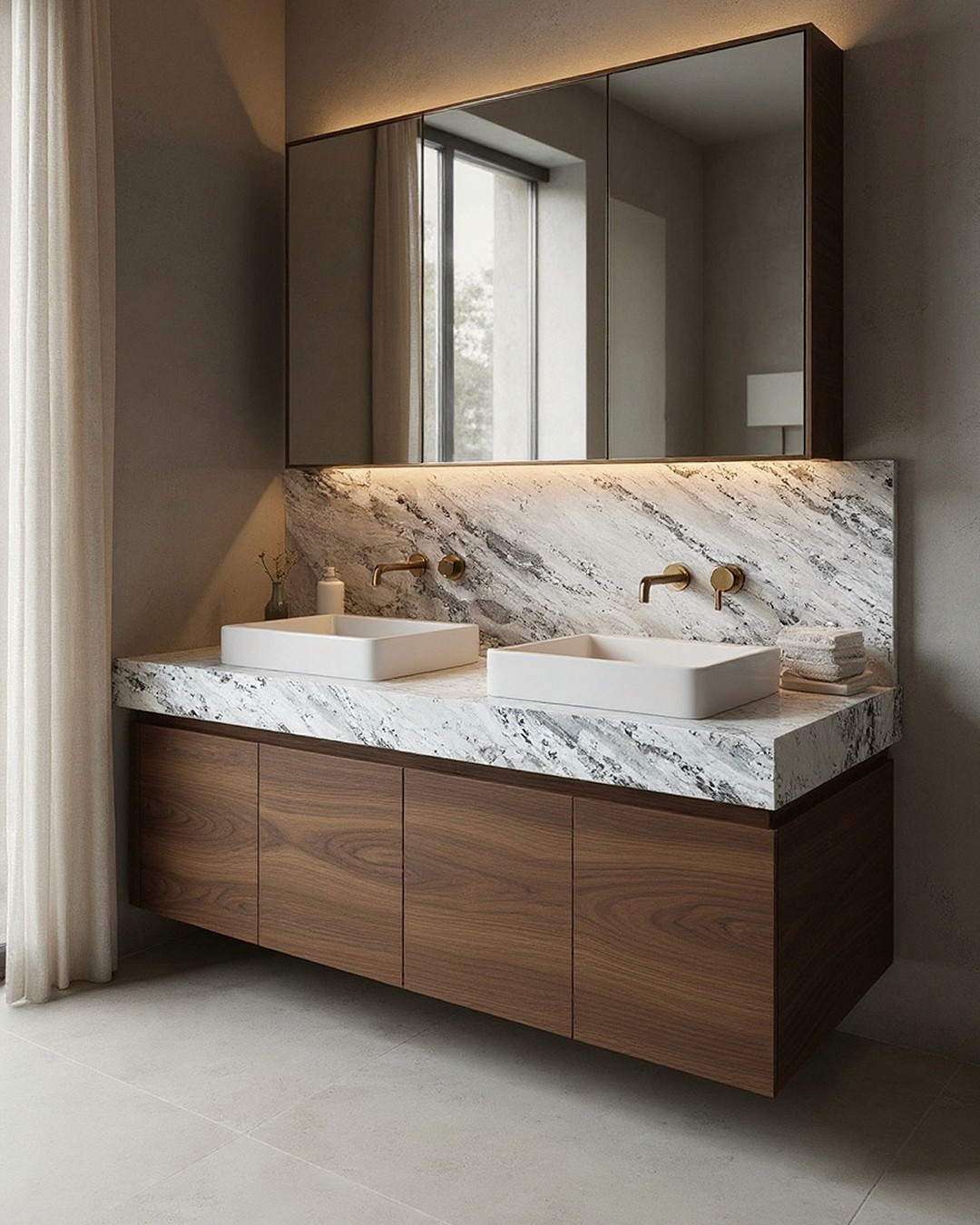
One of the most influential pairings is Calacatta Viola marble with walnut cabinetry.
The richness of dark walnut amplifies the wine tones within the marble, while the stone elevates timber from simple joinery into something deeply architectural and luxurious.
Together they create interiors that feel:
Warm
Grounded
Sophisticated
Atmospheric
Timeless
This is why architects increasingly use Calacatta Viola kitchens as the centrepiece of contemporary homes.
The combination of walnut timber, burgundy veining, brushed brass, and natural stone creates interiors that feel enduring rather than trend-driven.
Calacatta Viola Marble Kitchens: Why Designers Love Them
Today's luxury kitchen is no longer purely functional.
It has become sculptural.
Designers increasingly use Calacatta Viola for:
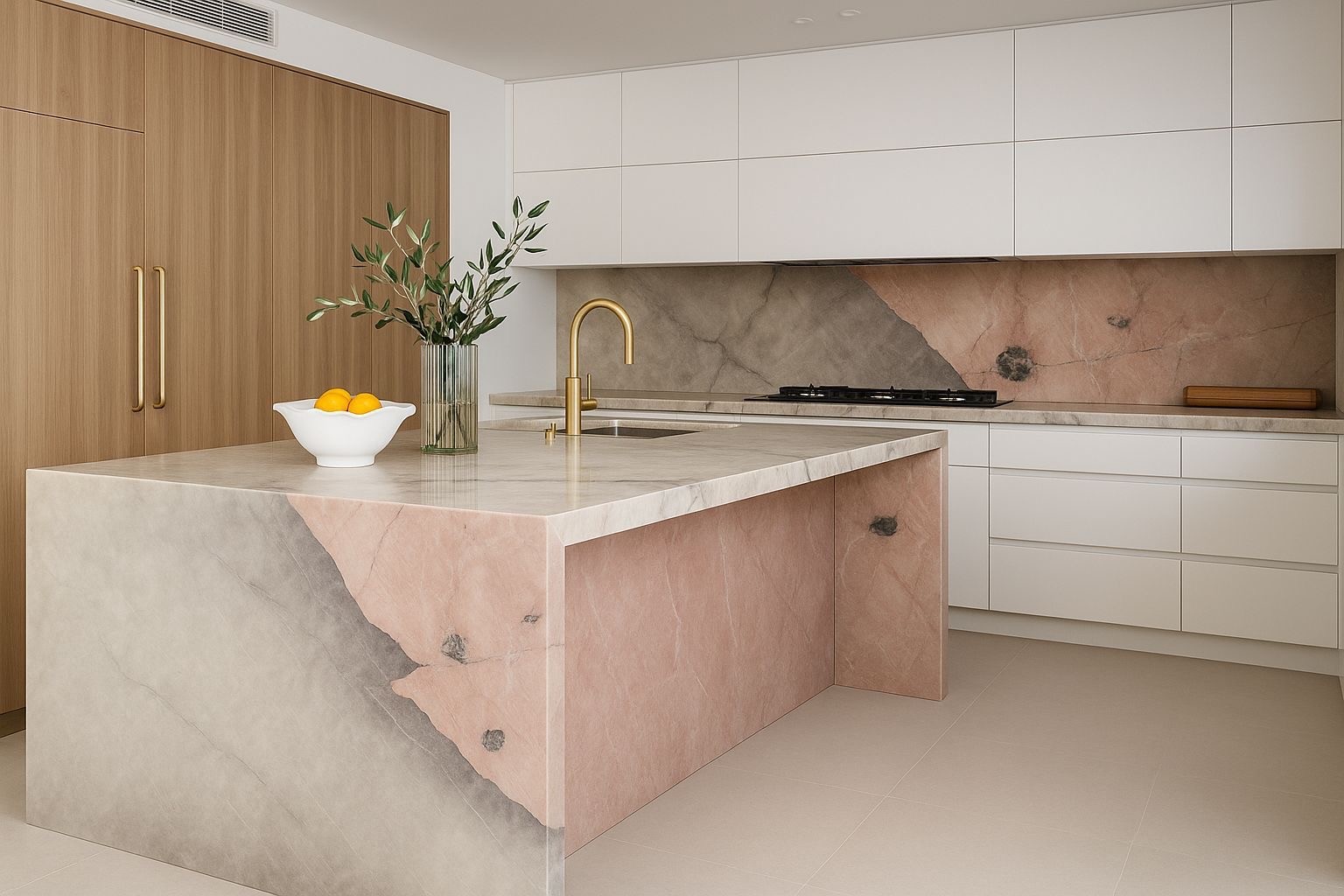
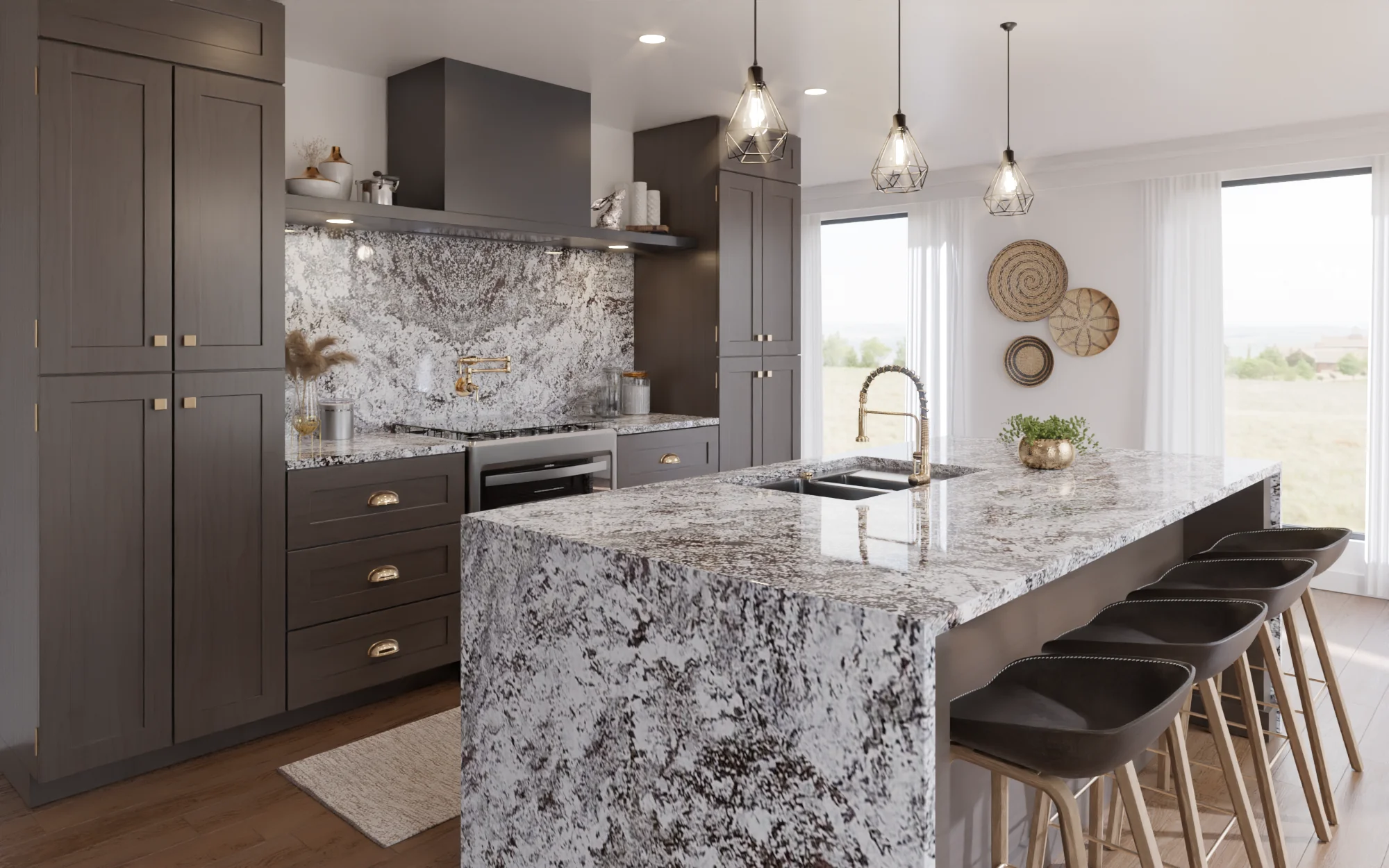
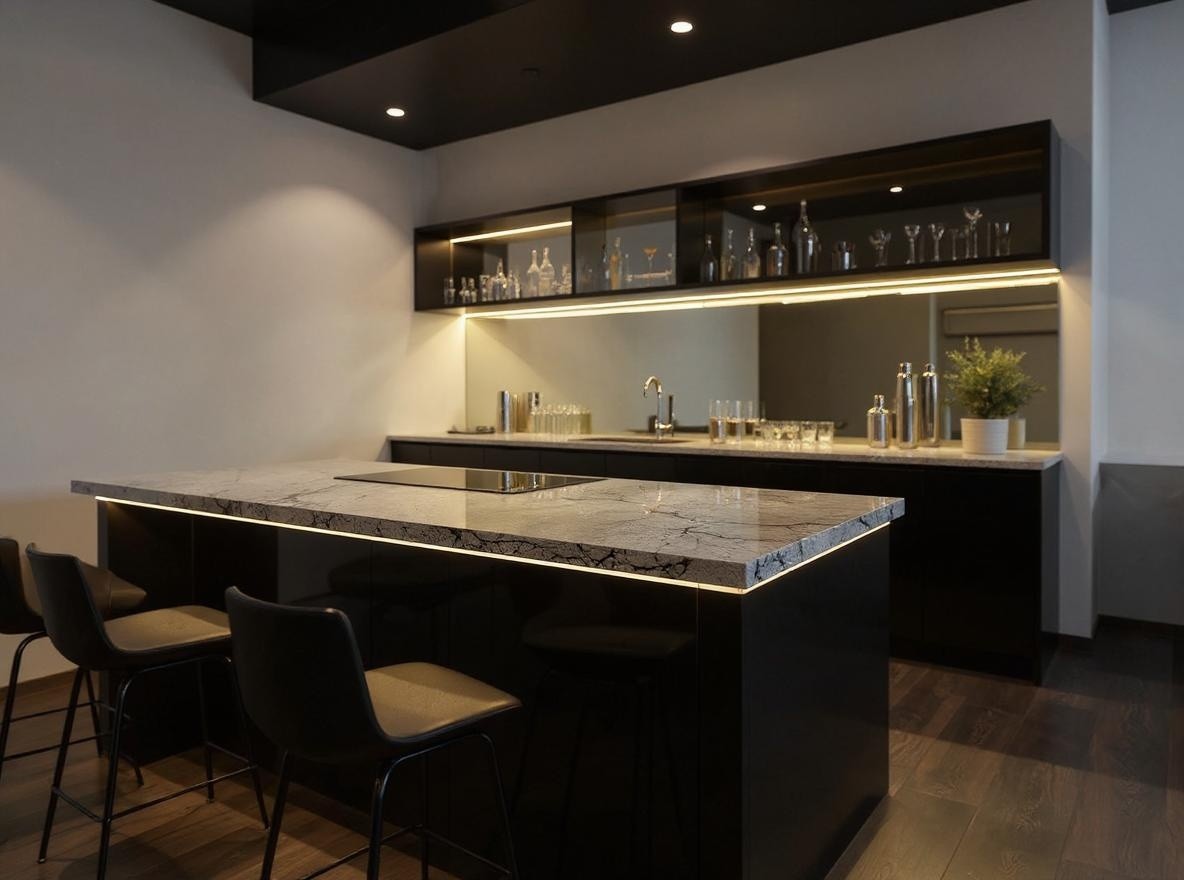
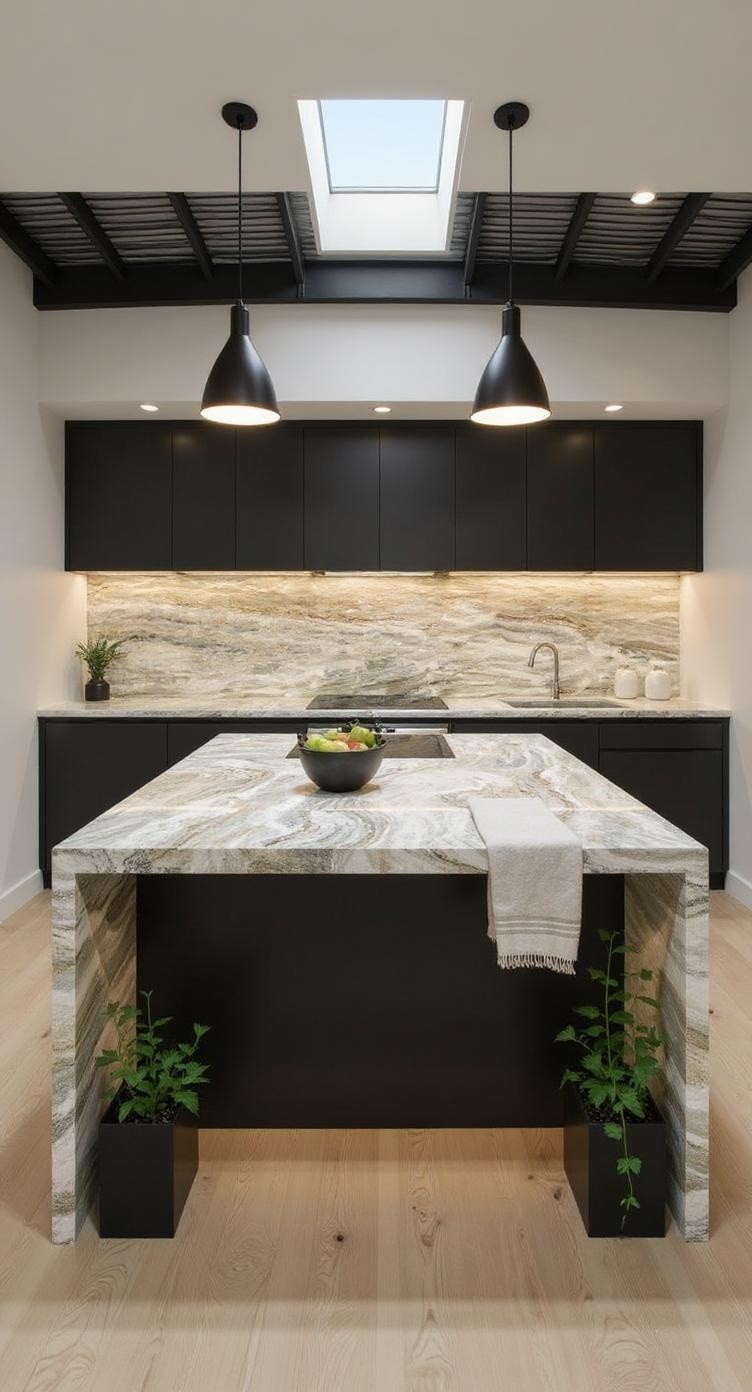
Waterfall kitchen islands
Full-height splashbacks
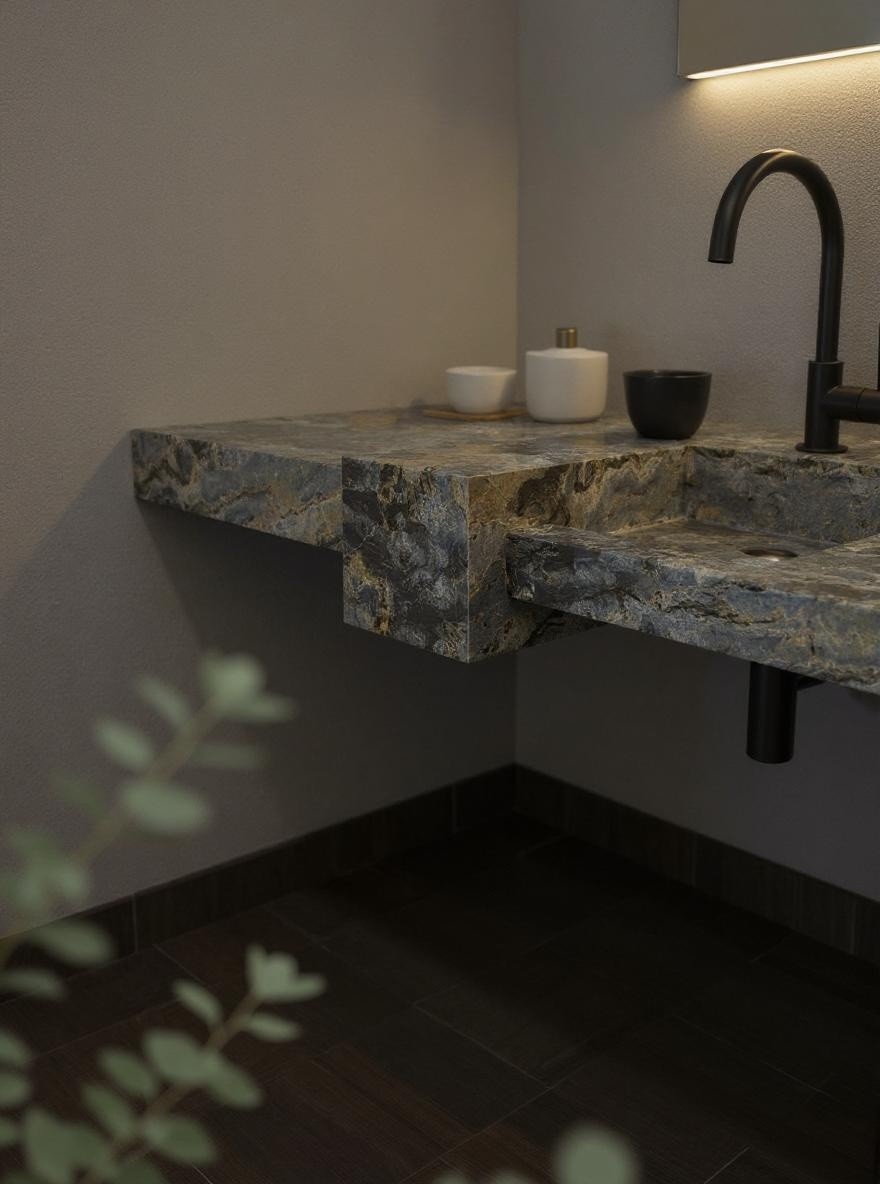
Integrated marble sinks
Curved stone islands
Thick mitred benchtops
Monolithic stone dining tables
Floating vanities
Hospitality bars and feature counters
Unlike quieter marbles, Calacatta Viola becomes the emotional focal point of the space.
A carefully selected slab can completely define an interior.
It pairs beautifully with:
Walnut cabinetry
Smoked glass
Brushed bronze
Limewash walls
Textured plaster
Warm neutral palettes
Sculptural lighting
The movement within the stone introduces softness and depth into otherwise minimalist interiors.
Because every slab differs naturally, every project feels truly unique—an exclusivity that matters enormously in high-end architecture.
Italian Calacatta Viola vs Turkish Viola Marble
As demand for Viola-style marble has increased globally, Turkish quarries have introduced stones with similar burgundy veining and dramatic movement.
Both are visually beautiful, but there are notable differences.
Italian Calacatta Viola Marble
Typically features:
Warm creamy-white backgrounds
Deep burgundy and wine-toned veining
Softer organic movement
Greater mineral depth
Stronger visual contrast
Highly unpredictable natural patterns
Italian Viola often feels painterly and emotional.
Turkish Viola Marble
Generally presents:
Cooler white or grey bases
More linear veining
Slightly flatter colour depth
More structured movement
Cleaner, controlled patterns
Both materials work beautifully in luxury interiors, but Italian Calacatta Viola remains especially prized for its warmth, complexity, and historical prestige.
For many architects, that authenticity carries enormous value.
Why Natural Marble Still Matters in Contemporary Design
Natural stone continues to captivate designers because it represents permanence.
In an era dominated by mass production and digitally repeated surfaces, natural marble introduces something irreplaceable:
Variation
Imperfection
Authenticity
Every Calacatta Viola slab is entirely unique.
Its veins were formed naturally beneath the earth over geological time. No algorithm designed them. No machine repeated them.
That uniqueness creates emotional depth within a space.
And increasingly, luxury clients are responding to materials that feel real rather than manufactured.
This shift explains why natural stone slabs — particularly expressive marbles like Calacatta Viola — are becoming central to the future of luxury interiors.
Calacatta Viola and the Return of Material-Led Design
Modern luxury interiors are increasingly embracing material-led design.
Rather than filling spaces with numerous finishes, architects are focusing on fewer materials used more intentionally.
Calacatta Viola perfectly embodies this philosophy.
A single bookmatched slab can become:
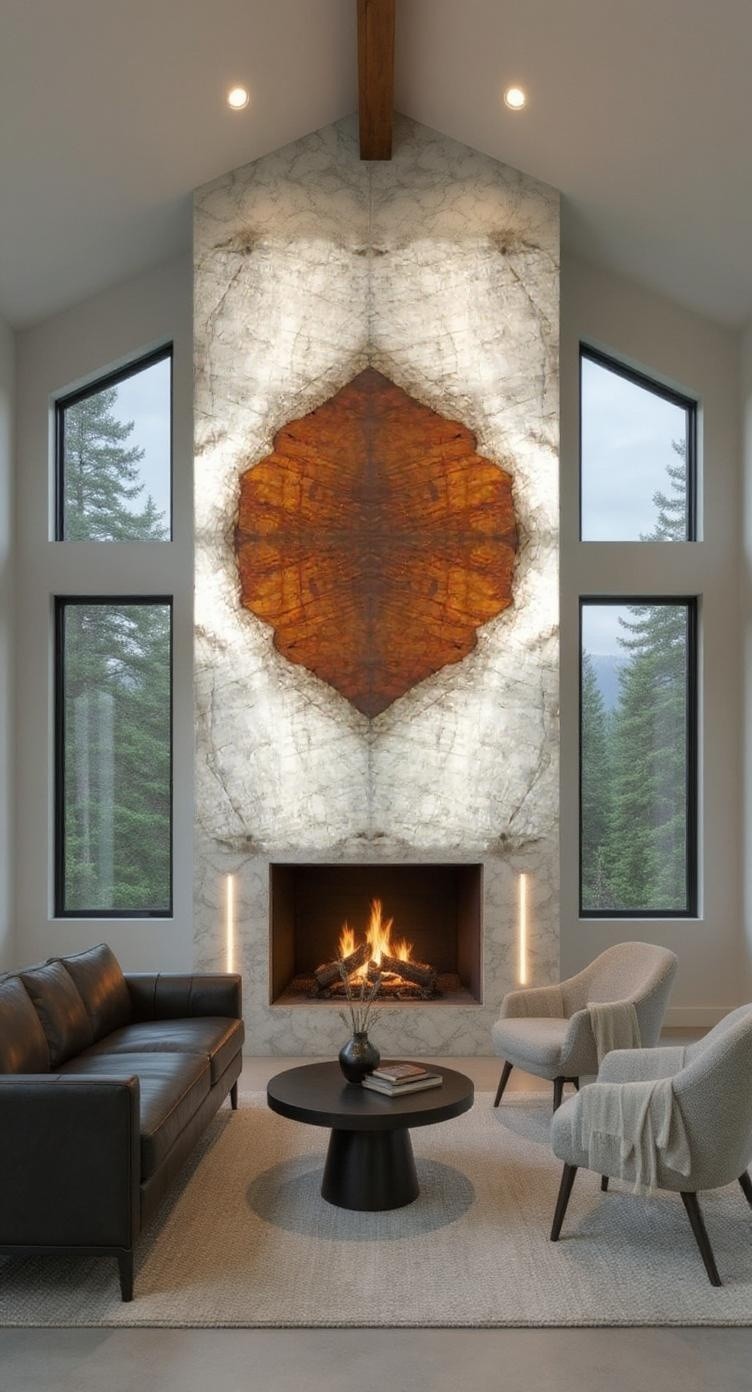
An architectural feature wall
A sculptural kitchen island
A statement bathroom
A dramatic hospitality installation
A collectible furniture piece
The stone itself becomes the design language.
Why Calacatta Viola Marble Feels Timeless
Although Calacatta Viola is currently one of the world's most desirable marble trends, its appeal extends far beyond fashion.
Its beauty is rooted in nature itself.
Its colours are geological.
Its movement is organic.
Its variation is authentic.
Unlike synthetic trends, natural materials with genuine character rarely lose relevance.
That is why Italian marble has remained desirable for centuries—from Ancient Rome to contemporary Australian architecture.
Calacatta Viola simply represents the newest chapter in that story.
Frequently Asked Questions
Is Calacatta Viola marble natural?
Yes. Calacatta Viola is a completely natural marble formed through geological metamorphic processes over millions of years.
Where does Calacatta Viola marble come from?
Authentic Calacatta Viola originates from the Carrara region in Tuscany, Italy.
Is Calacatta Viola suitable for kitchens?
Yes. It is widely used for luxury kitchen benchtops, splashbacks, and islands. Like all natural marble, it requires proper sealing and ongoing care.
Which colours pair best with Calacatta Viola?
Excellent pairings include:
Walnut timber
Burgundy tones
Brushed brass
Bronze
Smoked glass
Warm neutrals
Textured plaster
Deep earthy palettes
What is the difference between Italian and Turkish Viola marble?
Italian Viola generally offers warmer tones, deeper burgundy veining, and more organic movement, while Turkish alternatives tend to appear cooler and more linear.
Why is Calacatta Viola so popular?
Designers are moving toward warmer, more expressive interiors featuring natural materials, burgundy tones, and statement stone surfaces—all qualities that Calacatta Viola delivers exceptionally well.
The Final Word
Calacatta Viola is ultimately a reminder that the earth creates beauty no human hand could fully invent.
Its veins are records of pressure.
Its colours are mineral transformations.
Its movement is geological history made visible.
In a world increasingly dominated by replication and speed, Calacatta Viola represents the opposite:
Authenticity
Craftsmanship
Time
Permanence
It is not simply marble.
It is nature's architecture itself.