In contemporary design, material selection is rarely just about finish. It is about atmosphere, authorship, and the ability of a surface to contribute something deeper to a space than function alone. The most compelling interiors are often defined not by excess, but by the presence of materials with integrity—materials that hold evidence of process, hand, and transformation.
This is what makes Raku so distinct.
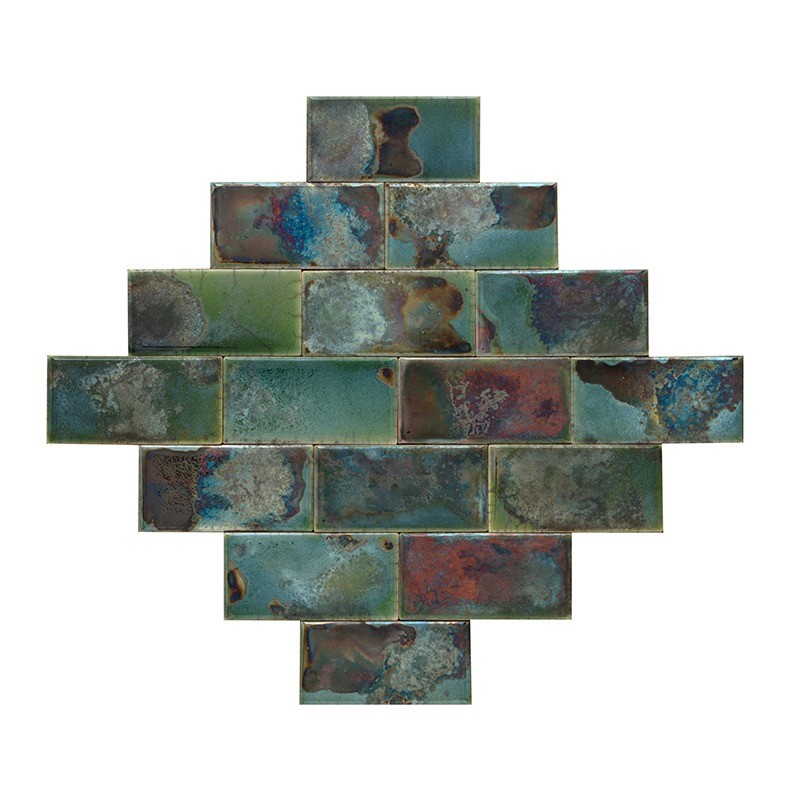
Part of the ORVI collection at Stone Age Australia, Raku tiles sit in a category far beyond standard decorative ceramics. They are completely handmade, individually glazed, fired, and rapidly cooled in a process descended from the Japanese tradition of Raku ware, which emerged in 16th-century Kyoto and became closely associated with the tea ceremony under potter Chōjirō and tea master Sen no Rikyū. Historically, Raku was valued not for industrial perfection, but for its immediacy, individuality, and quiet depth.
For the right designer, that distinction matters.
The Origin of Raku: A Surface Language Shaped by Fire
Raku is not simply a visual style. It is a philosophy of making.
The Japanese tradition emerged from a desire for a different kind of beauty—one rooted in restraint, tactility, asymmetry, and the acceptance of variation. Encyclopaedia Britannica describes Raku ware as having originated in 16th-century Kyoto for the tea ceremony, with hand-moulded forms and a deliberate departure from more formal ceramic conventions. Museum descriptions from The Met likewise note that Raku ware was highly esteemed within tea culture and was shaped by hand rather than thrown on a wheel, contributing to its direct, intimate character.
That lineage is important because it defines how the material should be understood today. Raku is not about repetition. It is about surface as event—the result of heat, glaze chemistry, oxidation, cooling, and the skilled judgment of the maker. Its beauty lies in the fact that it cannot be fully standardised.
For architects and interior designers, this offers something increasingly rare: a material with visible evidence of process.
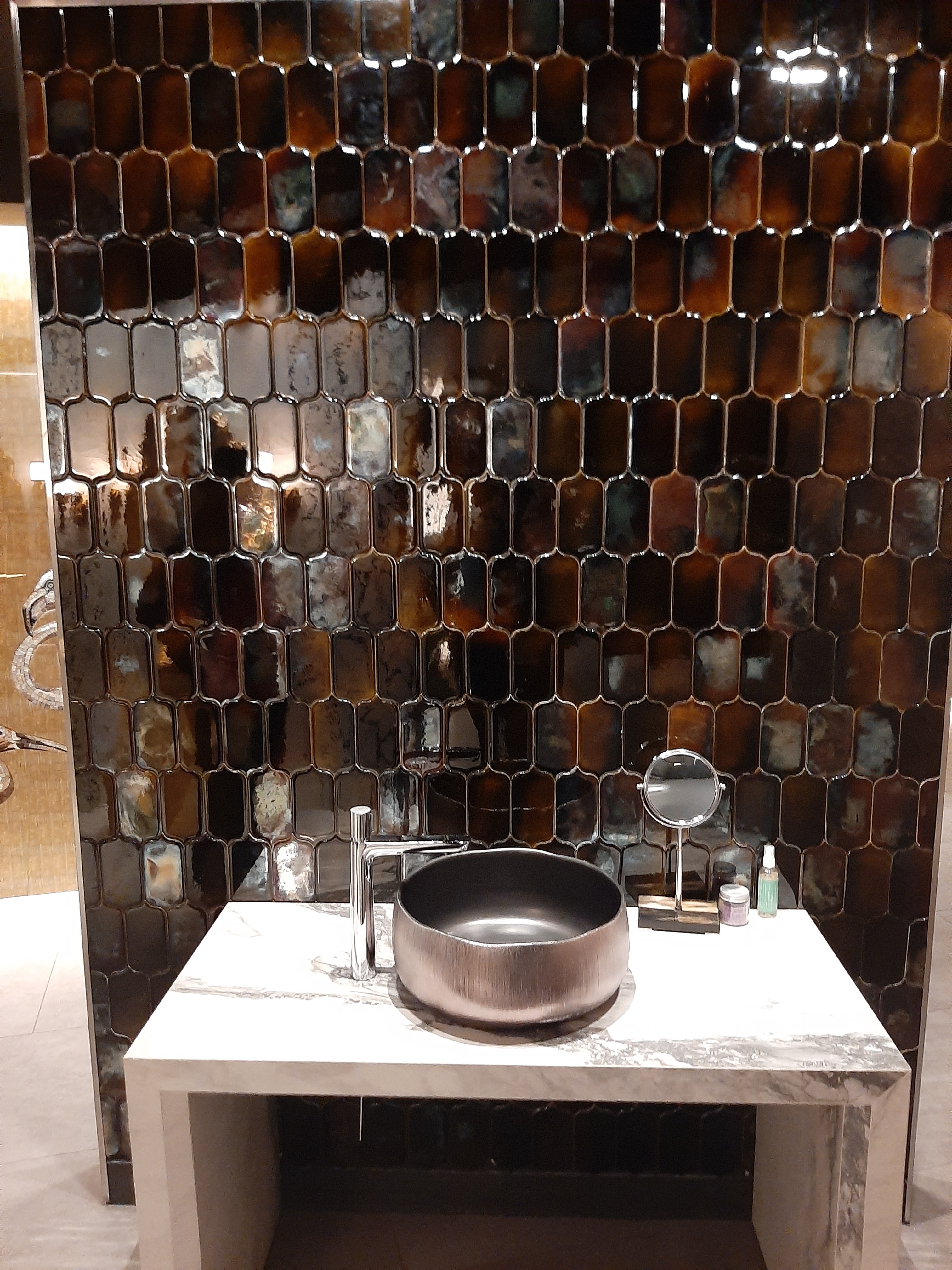
Why Raku Feels Different
There are many tiles that imitate handmade character. Very few are genuinely made through a process that allows fire, glaze, and cooling to leave a visible imprint on every piece.
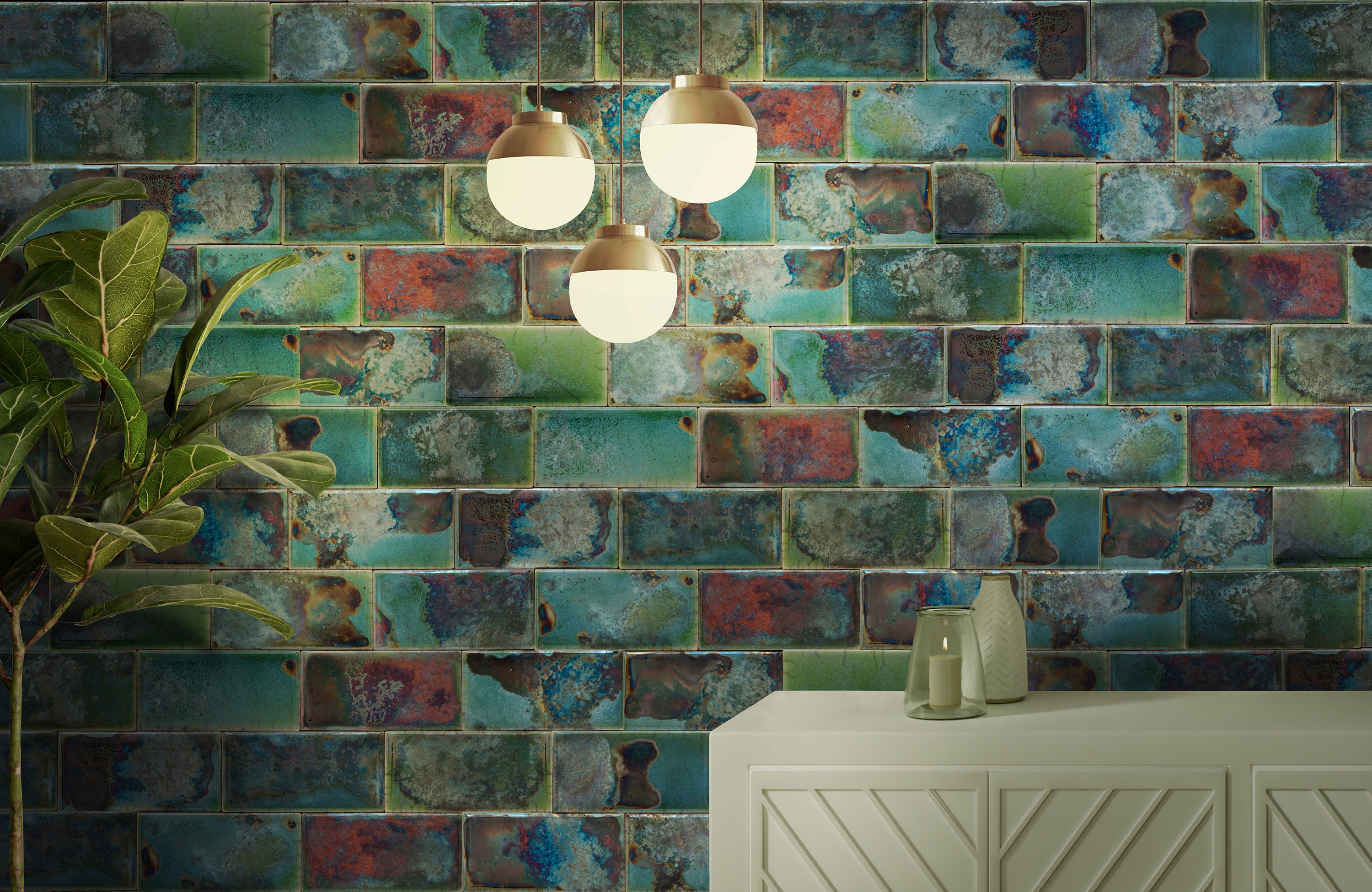
ORVI describes its Raku tiles as being expertly hand glazed, fired, and rapidly cooled using traditional methods, producing intense colours and unpredictable patterns. The collection is offered in a wide range of tonalities, and ORVI emphasises that small variations in process affect the final result, opening a broader field of creative possibility.
That unpredictability is not a flaw. It is the point.
In a market crowded with flat, repeatable, machine-perfect surfaces, Raku offers an alternative: one where the finish feels alive. Light catches differently across each tile. Tonal shifts emerge from piece to piece. Glaze settles with slight irregularity. The surface holds movement even when the wall itself is still.
This is why Raku belongs in projects where materiality is meant to be felt, not merely observed.
The Value of the Handmade
Yes, Raku is expensive.
It should be.
To evaluate a handmade Raku tile against a standard commercial ceramic on price alone is to misunderstand what is being specified. These are not mass-market wall tiles designed for broad sameness and cost efficiency. They are artisanal surfaces shaped through a labour-intensive process that requires hand glazing, controlled firing, rapid cooling, and acceptance of variation as part of the final composition. ORVI identifies the collection as handmade ceramic with a copper oxide overlay, reinforcing that the visual richness of the surface comes from material chemistry and craft, not printed decoration.
For the right project, the cost is not an objection. It is part of the value structure.
Designers routinely invest in bespoke joinery, natural stone, hand-finished timber, and custom lighting when those elements bring distinction to a space. Raku sits within that same level of thinking. It is specified not because it is economical, but because it creates an atmosphere that cheaper materials cannot.
The right client will understand that immediately. The right designer should too.
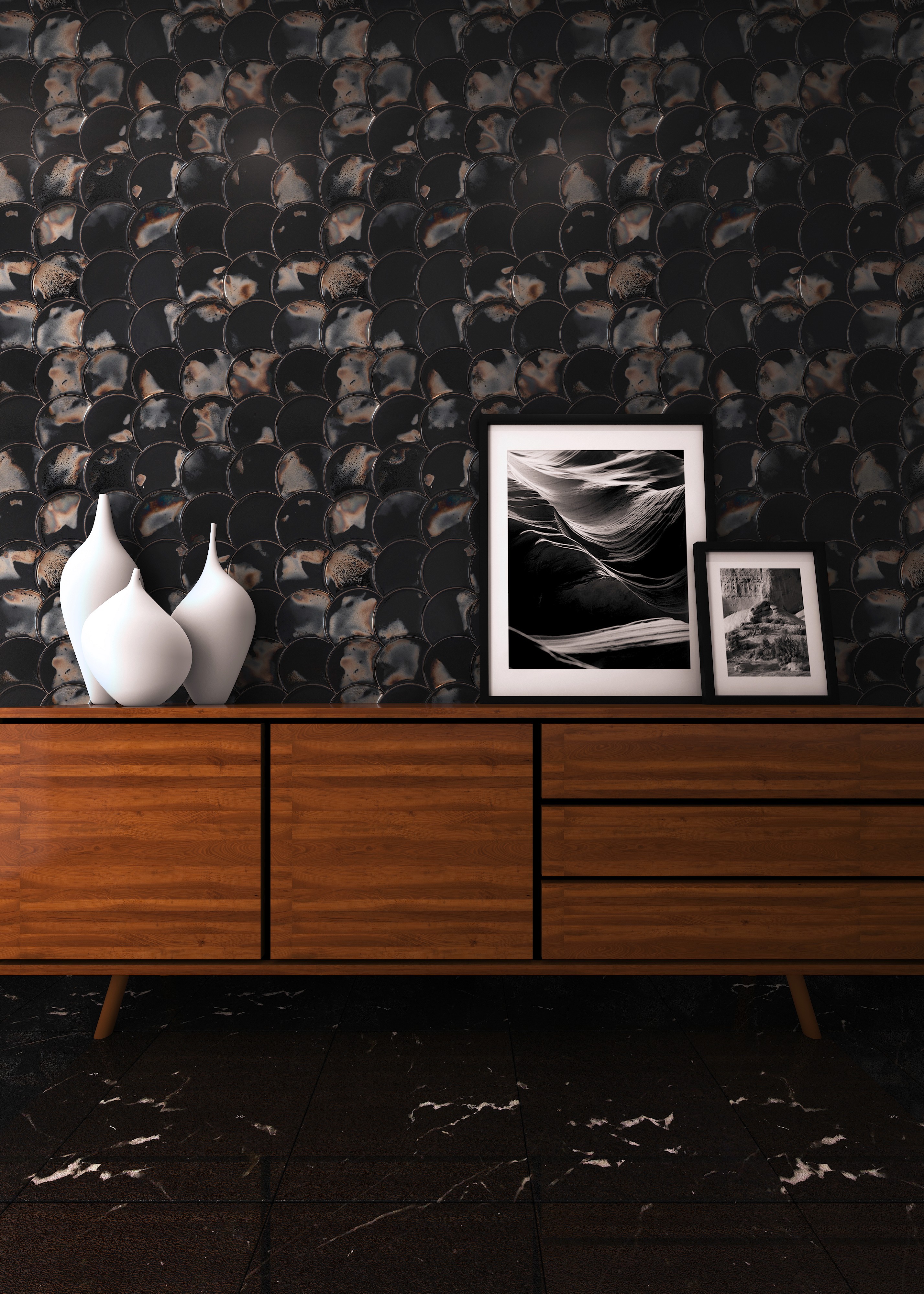
A Material for Designers Who Understand Restraint
Raku does not need to be used everywhere to be powerful.
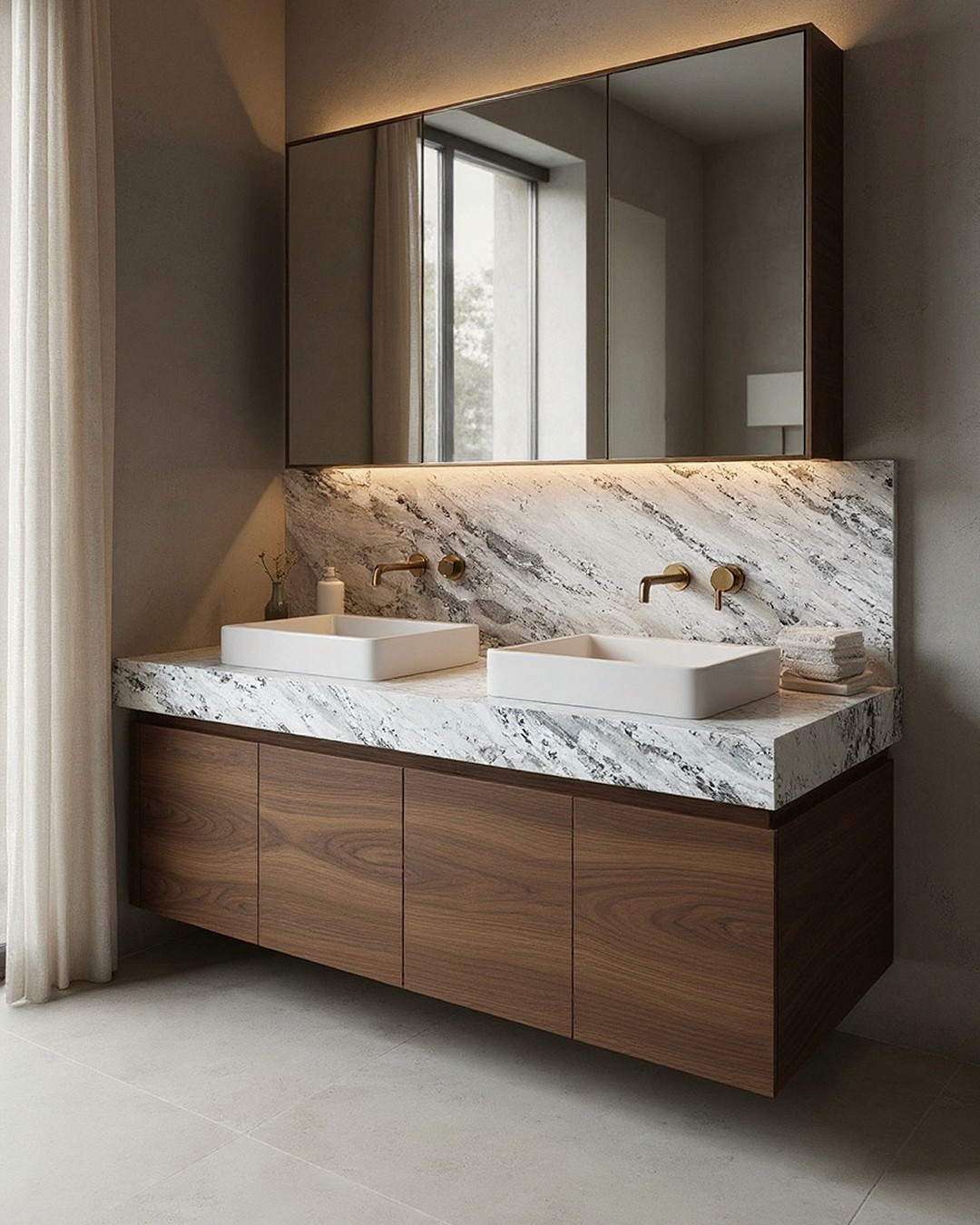
In fact, it is often most effective when treated with precision—used where a moment of texture, reflectivity, and crafted irregularity can anchor the broader scheme. ORVI lists the collection for interior wall, bathroom wall, and backsplash applications, with standard sizes including 75 x 150 mm, 200 x 100 mm, and custom sizes on request.
That makes the collection particularly suited to:
powder rooms
vanity walls
kitchen splashbacks
bar fronts
boutique hospitality joinery
fireplace settings
framed wall panels and niche detailing
In these settings, Raku performs less like a background tile and more like a handcrafted skin for architecture.
Used correctly, it creates a moment of pause within a space.
Colour, Lustre and Controlled Irregularity
One of the most compelling qualities of Raku is the relationship between colour and light. ORVI describes the outcome of the process as “intense colours and unpredictable patterns,” and that is exactly where the collection differentiates itself from flatter decorative ceramics.
These are not dead surfaces.
They carry lustre, tonal fluctuation, and a degree of depth that changes with angle, shadow, and artificial illumination. In daylight, the finish can feel layered and mineral. Under low light, it becomes richer, moodier, and more atmospheric. This makes Raku particularly valuable in interiors where lighting design is part of the architectural narrative.
For Australian designers working in premium residential, boutique multi-residential, wellness, or hospitality environments, that quality is highly relevant. It allows a wall surface to perform almost like jewellery within the room—composed, deliberate, and materially expressive without being overt.
The Role of Raku in Contemporary Australian Interiors
Australian design continues to move toward more natural, tactile, and materially grounded spaces. Clients are asking for interiors that feel warmer, less synthetic, and more individual. At the same time, designers are increasingly balancing minimal planning with richer surface expression.
Raku answers that shift beautifully.
It brings craft into contemporary schemes without feeling nostalgic. It introduces colour without relying on graphic excess. It offers irregularity, but in a refined and controlled way. In a pared-back palette of stone, timber, limewash, bronze, and linen, a Raku wall can become the element that lifts the entire composition.
This is especially powerful in projects where designers want to move beyond generic luxury. True luxury in today’s interiors is not about shinier finishes or louder gestures. It is about rarity, handwork, and materials that feel impossible to mass-produce.
Raku belongs squarely in that conversation. Its roots in Japanese ceramic tradition and its contemporary artisanal execution make it a surface of cultural depth as well as decorative impact.
Why It Belongs in the ORVI Collection
The ORVI brand has long positioned itself around artisanal surfaces, bespoke orientation, and craft-led production, and the Raku collection is a natural extension of that philosophy. On ORVI’s own collection page, the emphasis is placed on hand glazing, traditional firing methods, individuality, and the creative potential created by process variation.
That is precisely why Raku does not read as a trend-driven decorative tile. It reads as part of a larger commitment to surface-making as an art form.
Within the Stone Age Australia offering, this gives designers access to something far more sophisticated than a standard imported ceramic line. It gives them a handmade collection with a genuine craft narrative, a clear material identity, and a finish language capable of elevating high-end interiors.
Not for Every Project — Exactly as It Should Be
It is worth saying plainly: Raku is not for every project.
It is not intended for value-engineered schemes. It is not for clients who want perfect uniformity. It is not for spaces where the brief is purely practical and the material palette is expected to disappear.
Raku is for projects where the designer wants the surface to speak.
It is for clients who understand that authenticity costs more. It is for interiors where the difference between “nice” and unforgettable lies in the calibre of materials selected. And it is for specifiers who know that the most remarkable surfaces are often the ones that carry evidence of the human hand.
That is not a limitation. It is exactly what makes the collection desirable.
A Surface Worth Specifying
For designers in Australia seeking materials with artistic manufacturing at their core, Raku offers something truly uncommon: a tile collection where tradition, fire, chemistry, and craft converge to create surfaces of lasting emotional and visual impact.
As part of the ORVI collection at Stone Age Australia, these handmade Raku tiles should not be viewed through the lens of commodity pricing. They should be understood as artisanal architectural finishes—specified in the same spirit as bespoke stone, handmade metalwork, or commissioned joinery.
Because when a surface has this much artistry behind it, hesitation is usually the wrong response.
The better response is to recognise it for what it is: a rare opportunity to bring genuine craft into contemporary design.